
Natural Gas vs Propane Fire Pit: Which is Better for Your Home?
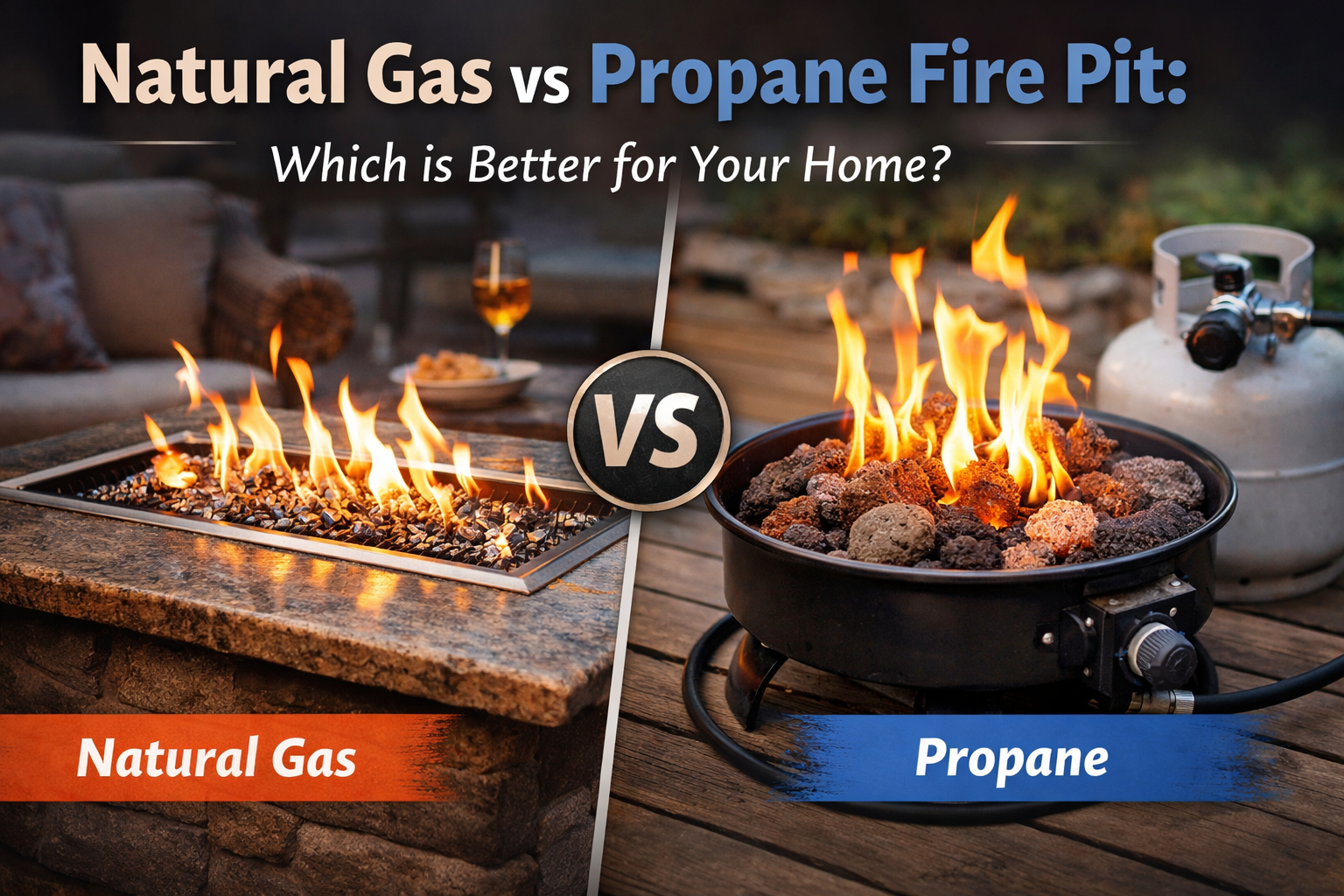
Adding a fire pit to your outdoor living space is one of the best ways to increase comfort, ambiance, and year-round enjoyment. But before you choose a design or style, there’s one important decision that impacts cost, convenience, and long-term satisfaction: natural gas vs propane fire pit.
Both options offer clean-burning flames, instant ignition, and modern convenience, but they are not interchangeable. The right choice depends on how your home is set up, how often you plan to use your fire pit, and what you value most: flexibility, long-term savings, or ease of use.
In this guide, we break down the pros, cons, costs, and performance differences to help you confidently decide which fuel source is best for your home.
Understanding the Basics: Natural Gas and Propane Fire Pits
Before comparing benefits, it’s important to understand how each system works.
A natural gas fire pit connects directly to your home’s existing gas line. Once installed, it provides a continuous fuel supply without refilling tanks.
A propane fire pit uses portable propane tanks, typically 20-lb cylinders similar to those used for grills. These tanks must be replaced or refilled when empty.
Both systems produce attractive flames and consistent heat, but their differences become clear in daily use and long-term ownership.
Natural Gas Fire Pits: How They Work and Who They’re Best For
Natural gas fire pits are popular with homeowners who want a permanent, low-maintenance solution.
Pros of Natural Gas Fire Pits
Unlimited fuel supply (no refilling)
Lower fuel cost over time
Cleaner-burning with minimal residue
Convenient for frequent or long use
Seamless integration with permanent outdoor spaces
Cons of Natural Gas Fire Pits
Requires professional installation
Higher upfront installation cost
Fire pit location is fixed
Not suitable for homes without a gas line
When evaluating natural gas fire pit pros and cons, convenience and long-term efficiency are the biggest advantages, but installation planning is essential.
Propane Fire Pits: Flexible and Easy to Install
Propane fire pits appeal to homeowners looking for flexibility and lower upfront costs.
Pros of Propane Fire Pits
Lower initial setup cost
No permanent gas line required
Portable and easy to relocate
Ideal for patios, decks, or rentals
Quick installation
Cons of Propane Fire Pits
Ongoing fuel refills
Tanks can run out unexpectedly
Higher long-term fuel expense
Requires storage space for propane tanks
For homeowners prioritizing flexibility or who don’t have access to natural gas, propane can be a practical solution.
Propane Fire Pit Cost vs Natural Gas: What to Expect
| Cost Factor | Propane Fire Pits | Natural Gas Fire Pits |
|---|---|---|
| Upfront Costs | Generally less expensive to install | Require professional gas line installation, increasing initial expense |
| Ongoing Costs | Fuel costs fluctuate and add up over time | Typically cheaper per hour of use |
| Overall Consideration | Lower initial cost, but long-term expenses can add up | Higher upfront cost, but often more economical for frequent use |
Performance and Heat Output Comparison
Both propane and natural gas fire pits produce attractive flames, but performance differs slightly.
Propane burns hotter, producing taller flames
Natural gas flames are steadier and more consistent
Both offer ample heat for ambiance and comfort
In most residential settings, the difference in heat output is noticeable but not a deciding factor for most homeowners.
Installation Considerations: What Homeowners Need to Know
| Installation Factor | Natural Gas | Propane |
|---|---|---|
| Professional Installation | Must be installed by licensed professionals | Minimal setup required |
| Permits | Required in many areas | No permits in most cases |
| Technical Requirements | Gas line sizing and pressure must be correct | Tank storage must meet safety guidelines |
| Best Use | Suited for permanent outdoor designs | More flexible, portable setups |
| Safety & Guidance | Professional guidance ensures safety, compliance, and optimal performance | Professional guidance recommended for safety and compliance |
Both propane and natural gas fire pits have unique advantages depending on your setup and usage. Propane offers flexibility and lower upfront costs, while natural gas is ideal for permanent installations and frequent use. Safety and proper installation are essential for both systems to ensure long-lasting, efficient performance.
Safety and Maintenance Comparison
Both systems are safe when installed and maintained correctly.
Natural Gas Safety & Maintenance
Fewer components to manage
No tank handling
Annual inspections recommended
Propane Safety & Maintenance
Regular tank inspections
Proper storage is critical
Connections must be checked more frequently
From a maintenance standpoint, natural gas systems tend to require less ongoing attention.
Environmental Impact: Which Is Cleaner?
Both fuels burn cleaner than wood, but there are subtle differences.
Natural gas produces slightly fewer emissions
Propane burns clean but requires transportation and tank refilling
Neither produces smoke or ash
For environmentally conscious homeowners, natural gas often edges ahead.
Which Option is Best for Your Home?
Ask yourself these questions:
Do you already have a natural gas line?
How often will you use your fire pit?
Do you want portability or permanence?
Are you planning a long-term outdoor living upgrade?
Choose Natural Gas If:
You use your fire pit frequently
You want long-term cost savings
You prefer a permanent installation
Choose Propane If:
You want flexibility and portability
You’re working with a smaller budget
You don’t have access to natural gas
There’s no one-size-fits-all answer, only what works best for your lifestyle and home setup.
Why Professional Guidance Matters
Choosing the wrong fuel type can lead to higher costs, limited usability, or safety concerns. Professional assessment ensures:
Proper fuel selection
Code-compliant installation
Safe, efficient operation
Long-term satisfaction
Expert input at the decision stage prevents costly changes later.
Conclusion: Making the Right Fire Pit Choice with Confidence
Choosing between a natural gas vs propane fire pit ultimately comes down to how you plan to use your outdoor space, your home’s infrastructure, and your long-term goals. Natural gas offers convenience, consistency, and long-term savings for homeowners with existing gas lines, while propane provides flexibility, portability, and lower upfront costs for those who need a simpler setup. Understanding fuel costs, installation requirements, and maintenance needs helps ensure you select a fire pit that delivers comfort, safety, and lasting value.
This information has been provided by Fireplace and Grill Experts, Inc., for informational and entertainment purposes. We are a locally owned and operated family business with over 30 years of experience in the hearth industry. If it is gas related, we are your professional and experienced service team. We proudly service Metro Denver and all surrounding areas, offering affordable, transparent pricing and exceptional service you can trust. Please contact us for a free estimate or with any questions you may have, we’re here to help you make the right choice with confidence.
FAQs – Natural Gas vs Propane Fire Pits
1. Is a natural gas fire pit cheaper to run than propane?
Yes, natural gas generally costs less per hour of use, making it more affordable for homeowners who use their fire pit frequently.
2. Does a propane fire pit produce more heat than natural gas?
Propane burns hotter and creates taller flames, but both options provide enough heat for comfortable outdoor enjoyment.
3. Can I convert a propane fire pit to natural gas?
Some fire pits can be converted, but the process must be handled by a licensed professional to ensure safety and code compliance.
4. Which fire pit option requires less maintenance?
Natural gas fire pits typically require less maintenance since there are no propane tanks to refill, replace, or store.
5. Do I need a permit for a natural gas fire pit?
In many areas, permits are required for natural gas installations, along with professional installation to meet local safety codes.
